


VERDICT: Vivo X300 Ultra
Our editorial rating is based on product testing.
- Unbeatable macro shots from an 85 mm telephoto lens
- Extremely bright and stable OLED display
- Massive 1/1.28" ultra-wide sensor
- Excellent optical stabilization
- Premium, punchy haptic feedback
- Fast 100 W wired charging
- Extremely high European price tag
- With a 35 mm focal length on the main sensor, it’s less practical
- Removal of the dedicated physical shutter button
- Shorter battery life compared to OPPO Find X9 Ultra
- Quieter and less full stereo compared to OPPO Find X9 Ultra
The premium smartphone market is going through a phase where many brands are satisfied with cosmetic tweaks and small mid-generation upgrades. Every now and then, though, a device appears that pushes the boundaries of mobile photography and engineering a step further. After the unusually successful era of the Vivo X100 Ultra model, which long reigned in our editorial ranking as the absolute favorite in the field of camera phones, its direct successor arrives on the scene — the Vivo X300 Ultra — and this time, also in a global version!
The new vivo doesn’t just bring a mindless hardware component swap, but rather an exceptionally targeted — though in many respects more conservatively tuned — refinement of its camera setup. In the editorial office, we put it through a rigorous test and compared it not only to its predecessor, but above all to its biggest current rival: the monstrous OPPO Find X9 Ultra. In this review, we’ll see whether Vivo defended its throne or had to step back in front of a more aggressive competitor.
Your coupon saves you hundreds of euros! Best price for Europe
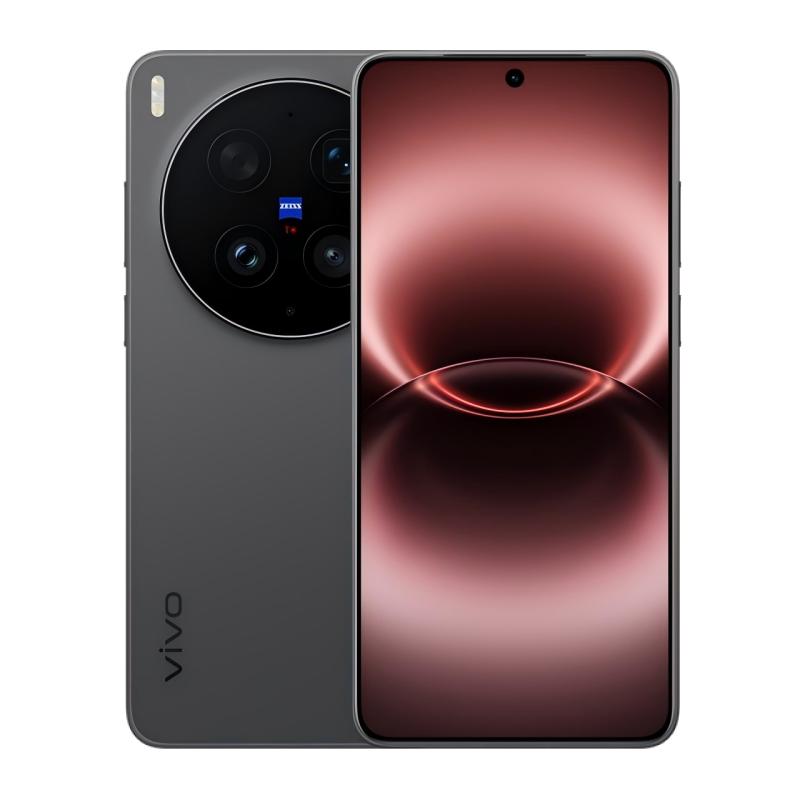
Our Chinese partner Gshopper brings the first offer for the official global version of the ultimate smartphone beast Vivo X300 Ultra. It arrives in Europe with an official price of 2000 €, but with our Gshopper coupons you can enjoy the best camera phone in the world for significantly less! The seller already has this smartphone in stock, with delivery to your address in about 10–15 days. A huge advantage is tuned duty-free shipping (and no postal fees), meaning you won’t pay any extra charges—no customs duty and no VAT. Everything is included in the coupon price.

For sale is the official global version of the smartphone, meaning support for all languages, including Slovak and Czech, automatic OTA updates, eSIM support, and all Google apps, NFC payments, and banking apps. In short: the same phone you’d buy directly in a store in Slovakia / in the Czech Republic.
Vivo X300 Ultra Global Version

TIPWith Standard Shipping via GShopper, you pay no extra fees—everything is already included in the price!
We recommend choosing Standard Shipping from the GShopper seller—so you won’t have to pay anything extra. Customs fees and any VAT are handled by the seller for you. Shipping can be selected in the cart, after you enter your delivery address. Delivery with this option usually takes about 15 business days from shipment from the warehouse, but it may also take longer.
TIPWith Standard Shipping via GShopper, you pay no extra fees—everything is already included in the price!
We recommend choosing Standard Shipping from the GShopper seller—so you won’t have to pay anything extra. Customs fees and any VAT are handled by the seller for you. Shipping can be selected in the cart, after you enter your delivery address. Delivery with this option usually takes about 15 business days from shipment from the warehouse, but it may also take longer.
TIPShipping is completely free.
For this product, shipping is available completely free of charge. However, this is the slowest delivery method, and the item may take 20 days to 1 month to arrive.
When you order from a Chinese warehouse, AliExpress adds a customs fee to your cart of about €3,70 per order. When you receive the package, you don’t pay anything extra.
Our extra service with VIP support — we’ll handle the order on Gshopper for you and ship it straight to your address.
If you’re not experienced with shopping on Gshopper, your payment won’t go through, or the coupon just isn’t working, we offer our readers and customers a service where we place the order directly to your address. You send us the money by bank transfer, and we’ll order the product straight to you. That way, you don’t have to worry about failed payments or coupon issues, and you can be sure the whole order will go 100 % smoothly. Plus, you automatically get our VIP support — we handle any shipment issues for you and help with claims too. The fee for this service is €15 on top of the product price. You can contact us by email at info(@)chinaplanet.sk or on Messenger, where we’re active all the time.
| vivo X300 Ultra | |
|---|---|
Model | vivo X300 Ultra |
Dimensions | 163 × 76.8 × 8.2 mm / 8.5 mm |
Weight | 232 g / 237 g |
Construction | front glass / rear glass / aluminum frame |
Durability | IP68 / IP69 |
Display | 6.82" LTPO AMOLED / 1 billion colors / 144 Hz |
1440 × 3168 px / 510 PPI | |
Dolby Vision / HDR10+ / HDR Vivid | |
1935 nits measured / high brightness depending on conditions | |
Armor Glass / Mohs level 4 | |
Processor | Qualcomm Snapdragon 8 Elite Gen 5 / 3 nm |
CPU | 2× 4.6 GHz Oryon V3 Phoenix L / 6× 3.62 GHz Oryon V3 Phoenix M |
Graphics | Adreno 840 |
Operating system | Android 16 / OriginOS 6 |
RAM | 12 GB / 16 GB |
Storage | 256 GB / 512 GB / 1 TB UFS 4.1 |
Memory card slot | No |
Main camera | 200 MP ultrawide / f1.9 / 35 mm / 1/1.12" / gimbal OIS |
200 MP periscope / f2.7 / 85 mm / 3.7x optical zoom / OIS | |
50 MP ultra-wide / f2.0 / 14 mm / 116° / OIS | |
200 mm / 2.35x optical zoom / OIS / Zeiss optics | |
400 mm / 4.7x optical zoom / OIS / Zeiss optics | |
Laser AF / spectral sensor / Zeiss optics / Zeiss T* coating | |
Video | 8K 30 fps / 4K 24-120 fps / 10-bit Log / Dolby Vision HDR / HDR10+ |
Front camera | 50 MP / f2.5 / AF |
4K 30/60 fps / 1080p 30/60 fps video / gyro-EIS / HDR | |
Battery | 6600 mAh Si/C / 6400 mAh European version |
Charging | 100 W wired / PD / PPS / QC / UFCS |
40 W wireless | |
Reverse wired | |
Reverse wireless | |
SIM | Dual Nano SIM + eSIM / up to 2 active |
WiFi | Wi-Fi 7 / dual-band |
Bluetooth | Bluetooth 5.4 / aptX HD / aptX Adaptive / aptX Lossless / LHDC 5 |
Navigation | GPS L1+L5 / Galileo E1+E5a / GLONASS / BeiDou / QZSS |
NFC | Yes |
Infrared port | Yes |
USB | USB-C 3.2 / OTG / DisplayPort |
Speakers | Stereo |
3.5 mm jack | No |
Hi-Res audio | 24-bit / 192 kHz |
Biometrics | Ultrasonic in-display fingerprint reader |
Sensors | Accelerometer / gyroscope / proximity / compass |
Satellite communication | Emergency SOS via satellite / only 16 GB + 1 TB model |
Colors | Eclipse Black / Victory Green / Silver |
Check out our unboxing!
Design and build: Loss of a practical button
At first glance, Vivo X300 Ultra continues in the proven design language of its predecessors. The dominant feature on the back is the massive, symmetrically arranged circular camera module, which instantly reveals the device’s intentions. The body keeps a solid aluminum frame, and the material finishing is at the highest level. Still, during everyday use we noticed one annoying step back.

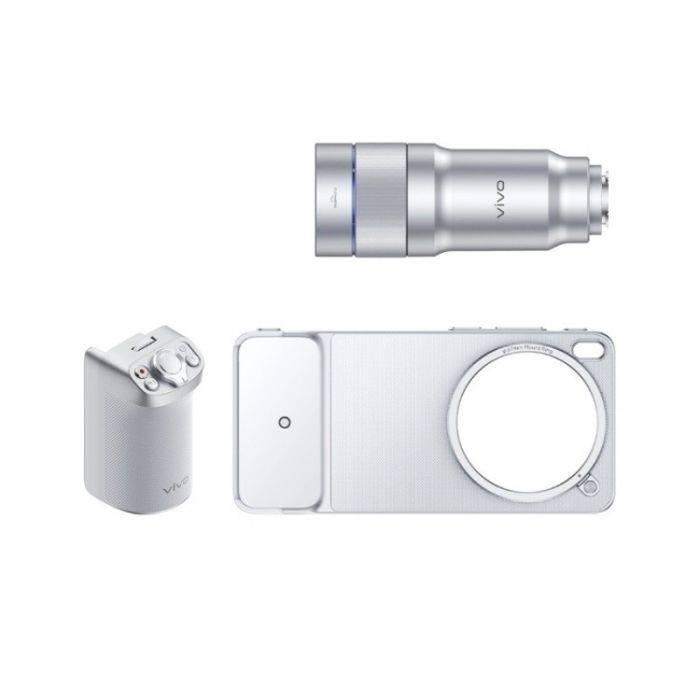
Compared to the older model, Vivo X200 Ultra, the manufacturer decided to remove the dedicated hardware button for camera control. On a smartphone that openly positions itself as a substitute for a professional compact camera, we consider this move a noticeable downgrade in ergonomics. If you want a comfortable physical shutter and the best mobile photography experience, you’ll have to pay extra for Photography Kit.

But when it comes to haptics, Vivo is making up for its reputation. The vibration motor is exceptionally strong, precise, and delivers a noticeably better response when typing or controlling the system than the one in OPPO Find X9 Ultra. As for sound, the built-in stereo speakers play cleanly, but in direct comparison with OPPO they end up on the short end. OPPO offers a fuller presentation, more pronounced bass, better treble, and is also overall louder.

Display and unlocking: Absolute top-tier with precise auto control
The front is dominated by a massive 6.82-inch OLED panel with LTPO technology. The sensor system for automatic brightness adjustment on Vivo X300 Ultra works flawlessly—it adapts instantly and with perfect accuracy, while visibility in direct summer sunlight is second to none. The panel delivers unusually vivid, yet precisely calibrated colors with full support for the wide color spectrum DCI-P3, HDR10+, and Dolby Vision.

No matter whether you’re watching movies in the highest quality, looking at your freshly taken photos, or simply navigating the system, the image feels unbelievably lifelike—thanks to deep blacks and razor-sharp rendering even of the smallest text details. With an adaptive refresh rate that can smoothly jump from 1 Hz up to 120 Hz, movement in the system is perfectly buttery, while static content drastically saves battery power.

When using and reading in the evening in the dark, you’ll appreciate advanced high-frequency PWM dimming, which eliminates the annoying screen flicker at low brightness levels—significantly reducing eye strain and helping prevent tired eyes. The display also uses, at first glance almost unnoticed, an ergonomic micro-curvature along the edges, making back-gesture swipes extremely comfortable and without your finger hitting sharp frame edges.

In combination with a lightning-fast touch response and an ultrasonic fingerprint sensor built directly under the glass, it’s one of the best display panels you can experience in today’s mobile technology world.
Performance and connectivity: raw power comes with its own price
For smooth, fast, and absolutely uncompromising operation of the entire device, the latest high-end chipset Qualcomm Snapdragon 8 Elite Gen 5 built using a modern 3 nm process takes care of it. Paired with LPDDR5X RAM with a capacity of 16 GB (while our OPPO Find X9 Ultra has only 12 GB RAM) and fast internal UFS 4.1 storage (in our case 512 GB), it’s a hardware powerhouse with no limitations. System responses are instant, apps launch without the slightest hesitation, and multitasking works with exemplary confidence—when the system can keep an enormous number of open tasks in memory at the same time.

In terms of connectivity and data transfer, the device fully integrates the modern Wi-Fi 7 standard, and in real-world tests it achieves stable transfer speeds of around 2 000 Mbit/s. This throughput enables instant downloading of large files, smooth streaming of demanding multimedia content, and a stable network connection.
The equipment is rounded out by a modern Bluetooth 5.4 interface, NFC, and a practical infrared port. We’re a bit surprised by the downgrade in Bluetooth version, because the chipset used should also support the new 6.0 standard. For example, competing OPPO Find X9 Ultra supports it.

We didn’t have any issues with 5G connectivity—the speeds in the city were just under 1 Gbit/s—and music streaming to wireless headphones works excellently even in a large fitness center. When we moved away from the device by a few walls, other models tended to hesitate and audio transmission started dropping out.
Where this flagship processor’s extreme performance really shows is under long-term, maximum load. During demanding stress tests or extended gaming of graphically top-tier games, the construction of the Vivo X300 Ultra has to deal with a large amount of generated heat. With such intense and continuous usage, the device temperatures rise noticeably. Even though the chipset delivers stable performance, the device’s construction already feels noticeably hot and unpleasant just when holding it in your hand—this is the price for the massive computing potential of this hardware.
Results from popular benchmarks:


Cameras: sensor architecture, optical magic, and a big titan showdown
Camera equipment is without a doubt the most important part of the Vivo X300 Ultra, and it’s also the area where the company’s engineers once again demonstrate their technical dominance. While most manufacturers offer safe, conventional solutions, Vivo—together with the German optical legend Zeiss—brings a lineup that combines raw hardware power with an unusual photographic philosophy.

However, when you put it next to its legendary predecessor Vivo X100 Ultra and its direct rival OPPO Find X9 Ultra, the key differences become clear—in results, in color science, and even in the day-to-day photography user experience.


Main sensor with a 35 mm focal length: an artistic dream that demands compromises
The heart of the entire photography system is the brand-new 200 MP Sony Lytia 901 sensor with a size of 1/1.12 inch and excellent f/1.9 aperture. However, the manufacturer took a very bold, and for many shocking, step here by locking the main sensor to a focal length of 35 mm. From the point of view of pure optics and aesthetics, this focal length is literally a blessing for photography enthusiasts, because it creates an incredibly natural and three-dimensional image without any wide-angle distortion of edges or proportions, which is otherwise a huge drawback of ordinary smartphones.

Portraits, street architecture, or object details therefore get that deep and natural optical bokeh we usually know only from expensive full-frame mirrorless cameras with prime lenses. In the app, you’ll also find a fantastic resolution switch, with the 25 MP mode proving to be the absolute pinnacle of perfection, delivering incredible micro-sharpness without night noise.
On the other hand, there’s everyday practicality. If you directly compare the Vivo X300 Ultra with the older X100 Ultra generation, which had a massive 1-inch sensor with the classic 23 mm focal length, or with the OPPO Find X9 Ultra with its 24 mm focal length, the newcomer loses some of its versatility.

While with OPPO or the older Vivo you can simply pull out the phone at a restaurant table or in a cramped interior and capture the whole scene, with the new X300 Ultra you have to almost constantly step back one or two paces so everything fits into the frame. Thanks to that, OPPO is a much better phone for carefree, quick family snapshots, but when it comes to the pure artistic value of the shot, Vivo with its 35 mm is playing in a completely different league.
Ultra-wide camera: When a giant sensor beats the competition
Capturing truly expansive scenes is handled by the 50 MP Sony Lytia 818 sensor, whose 1/1.28-inch size puts it more in the main-camera category than among ultra-wide add-ons. With a 14 mm focal length and f/2.0 aperture, it produces shots with exemplary dynamic range, minimal chromatic aberration, and above all perfect sharpness even in the farthest corners.

Using this huge sensor pays off most after sunset, when the optics can soak up an enormous amount of light and the system doesn’t need to rely on aggressive noise-reduction algorithms at all. In this particular showdown, Vivo X300 Ultra successfully outclasses its rival OPPO Find X9 Ultra.
While the ultra-wide sensor on OPPO suffered from occasional edge refocusing, softer corners, and a slight shift of green tones away from reality, Vivo maintains perfect color consistency with the other sensors and clearly dominates in image cleanliness. If needed, you can also use this ultra-wide lens as a 1x zoom lens with a 23 mm focal length, but the drop in quality compared with the primary sensor is, of course, noticeable.
Telephoto lens: Unbeatable macro versus king of extreme zoom
In the optical zoom category, vivo has thrown into the fight its proud 200 MP Samsung ISOCELL HP0 sensor with a size of 1/1.4 inch and a 85 mm focal length, which corresponds to roughly 3.7x zoom. At focal lengths from 85 to 170 mm, this telephoto lens produces truly stunning shots. The real visual miracle, however, happens when you switch to macro mode.

The lens can focus from an incredible distance of just 15 centimeters, beating not only its hugely successful predecessor, the X100 Ultra, but literally making a mockery of the entire current market competition. For detailed shots of insects, dewdrops, or flower textures, Vivo X300 Ultra has absolutely no rival. The OPPO Find X9 Ultra, with its 3x and 10x periscope, feels surprisingly flat in the macro category compared to vivo and a bit too much like a software-assisted calculation (though it’s still not bad).

But if you flip the card and point the lenses at objects hundreds of meters away, OPPO takes back its lost crown. The Find X9 Ultra features a fantastic dedicated 10x optical periscope with a 230mm focal length. At extreme zoom levels—20x to 30x—OPPO can keep natural textures and sharpness, while vivo X300 Ultra has to rely on a heavy digital crop from its 85mm sensor. At those moments, vivo hits physical limitations, and the image begins to show a noticeable loss of micro-contrast and fine detail—confirming OPPO’s dominance when hunting from long distances.
Photo samples:


Color rendering and video recording
In terms of color processing, Vivo traditionally offers a trio of modes tuned by Zeiss, from which you can truly choose freely. Zeiss Natural (which we used in our test shots) delivers faithful, raw, and accurate rendering without unnecessary embellishment, while the Vibrant and Textured modes add deep shadows and a contrast-rich, artsy atmosphere tailored for social media. There are also other modes and options for custom editing, so photography enthusiasts can really have fun with the look of their final shots.

OPPO, on the other hand, bets on a single profile from Hasselblad that produces beautifully subtle, moody colors—though at sunset it sometimes dangerously oversaturates orange and red tones. An interesting paradox of the Vivo X300 Ultra is how its software portrait mode works. While the standard photo mode produces razor-sharp images from the 35mm and 85mm lenses, the dedicated Portrait mode surprisingly shows visibly softer rendering and more aggressive skin smoothing.

As for video recording, the massive amount of megapixels really shows, with support for 8K at 30 frames per second recording, as well as smooth 4K at 120 frames per second across all rear sensors. There’s also support for professional Log profiles and the top-tier APV codec. Optical stabilization while walking is excellent and easily matches the level of the biggest competitors.
A front 50MP camera with a wide 24mm focal length delivers equally outstanding and stable performance, with very precise skin-tone rendering—brilliantly rounding off this fascinating yet highly specific photographic setup.
Video samples:
Operating system: Lightning-fast smoothness
Across the software side, the Vivo X300 Ultra comes with the latest operating system Android 16, topped with a redesigned OriginOS in its international version with the build number 6. This system is a huge step forward in terms of visual clarity and the overall user experience. Compared to the older interfaces we knew from the X100 Ultra generation, the new OriginOS is incredibly smooth, perfectly balanced aesthetically, and feels like it practically flies under your fingertips.

Animations are smooth, transitions between demanding apps happen without a single stutter, and the system can fully tap into the raw chipset power of Snapdragon 8 Elite Gen 5, even in the photo app. The manufacturer has put extra emphasis on rich customization—everything from icon shapes and dynamic widgets to detailed lock screen tweaks, so you can tailor the phone exactly to your taste. The system also aggressively avoids killing background processes, which makes multitasking with a large amount of RAM a genuinely enjoyable experience.


A breakthrough moment—and a slight letdown—comes when we compare this software ecosystem directly with the approach chosen by OPPO. The Find X9 Ultra model with its ColorOS interface may be impressively strong in design—perhaps even a bit too flashy for some—but it brings with it a true revolution in the form of the O+ Connect tool. This magical software bridge lets OPPO devices communicate flawlessly, natively, and without interruptions with Mac computers and the entire Apple ecosystem.

It enables wireless mirroring, lightning-fast file transfers that simulate AirDrop, and notification synchronization. Vivo X300 Ultra doesn’t offer anything this sophisticated for the Apple platform. It stays true to the classic Android approach, which means that if you work on Windows, you’ll be extremely happy thanks to the integration with the Phone Link app.
Battery and charging: A generational leap, but not enough to dethrone the absolute king
In the world of flagship phones, the endurance and energy management department has literally been revolutionized over the past few years, and Vivo X300 Ultra is a shining example. Thanks to using the latest silicon-carbon (Si/C) technology, the manufacturer managed to fit a high-capacity battery of 6 600 mAh into a relatively slim body. If we look back at the excellent predecessor, the Vivo X100 Ultra model with its 5 500 mAh (also Si/C) battery, we’re talking about a massive generational leap that’s extremely noticeable in everyday use.

With Viva’s new innovation, any anxiety about a dead phone before the end of a demanding workday simply disappears. Whether you’re taking photos nonstop in direct summer sunlight with the display brightness maxed out, recording 4K videos, or consuming multimedia content, the Vivo X300 Ultra handles the whole day and into the evening, leaving you with a comfortable buffer in the battery indicator. With typical, more moderate use, you can get a solid two days without any issues.

But when we put this outstanding battery life head-to-head against the biggest rival, the OPPO Find X9 Ultra, Vivo still ends up on the shorter end of the stick. OPPO managed to push the limits of physics a bit further and integrated up to 7 050 mAh into its model. Combined with better cooling management and a more aggressive software optimization, OPPO can deliver an incredible three days of operation.

When the percentages finally drop to zero anyway, the Vivo X300 Ultra pulls out its tried-and-tested weapon in the form of 100 W wired charging with Super FlashCharge. Thanks to the fantastic charging dynamics, topping up this massive 6,600 mAh battery from 1% to full takes about an hour:
Charging from 1% to 100%:
- 10 min.: 14%
- 20 min.: 31%
- 30 min.: 49%
- 40 min.: 66%
- 50 min.: 84%
- 60 min.: 100%


Final verdict: Reason or a photographer’s heart?
The final choice between these two tech gems isn’t about which phone is objectively better, but about what kind of user you really are. The OPPO Find X9 Ultra is the perfect triumph of logic, versatility, and everyday practicality. It’s a complete smartphone with no weak spots—it wins you over with unbeatable battery life, steady performance without overheating under demanding tasks, and also with a brilliant connection to the Apple ecosystem thanks to the O+ Connect feature.

If you’re looking for a phone that will take a great photo right after you pull it out of your pocket in any situation, it can smoothly zoom in on distant objects with a 10x optical periscope while also serving as an unstoppable everyday work tool—OPPO is clearly the smarter choice.

Vivo X300 Ultra, on the other hand, is a pure experience for the heart—built around an uncompromising, and sometimes even stubborn, photography philosophy. By giving up the classic wide focal length in favor of 35 mm film-style and adding an unparalleled telephoto macro, Vivo created a tool that doesn’t target the mass market, but goes straight for the soul of photography enthusiasts.

If you’re after real artistic character in mobile optics, that vivid sense of depth, and an extraordinary visual story, the new generation—as well as the old one in the form of X100 Ultra—literally has you falling for it. No matter whether you eventually choose a sensible, tech-packed universal, or a bold photographic jewel, you’ll be holding the absolute best that today’s mobile technology can offer and meet your specific needs.

Follow the China Planet website, subscribe to our monthly newsletter, and be sure to check out our Facebook page, the China Planet group, and join our Telegram, where we add the best offers and coupons from China every single day.
Don’t miss the best coupons 📩
Subscribe and we’ll email you new coupons before they expire. We only send it once a month — no spam.


Discussion (0)