


VERDICT: OPPO Find X9 Ultra
Our editorial rating is based on product testing.
- Ridiculous battery life
- Top-tier optics
- Unique ecosystem with Apple
- Extreme performance
- High durability
- High price
- Thermal management (in extremes)
- Bloatware
- High weight
In recent years, the smartphone market has been going through a phase of certain stagnation, when many manufacturers rely only on very slight, almost invisible improvements between generations. But from time to time, a device appears that flips all the established rules upside down and shows us what a real technological peak should look like.
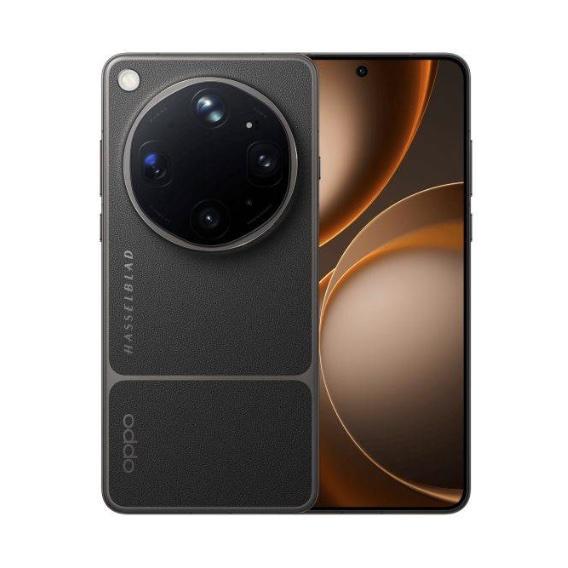
That kind of device is exactly the new OPPO Find X9 Ultra—an exclusive piece of hardware that, after all these years of missing Ultra models from this brand on the global market, finally makes its way into our hands and into our lives.
First impressions after unboxing the OPPO Find X9 Ultra
We at the editorial team received this massive and ambitious smartphone with big expectations, because on paper its specs look like something from another world—whether we’re talking about extreme camera resolutions, a massive battery capacity with new silicon-carbon technology, or uncompromising performance powered by the latest processor.

The first days we spent with this phone clearly showed us that we’re holding one of the most comprehensive, best-equipped, and most brutal smartphones available right now—one that won’t be intimidated by absolutely any competition, whether we mean the established models from Samsung, or other Chinese giants.
We’ve prepared an exceptionally extensive and in-depth look at every aspect of this device, from its luxurious design and incredible endurance to the fascinating user interface experience, all the way to a detailed breakdown of its photography capabilities, which we also compared directly with our long-time editorial favorite, the Vivo X100 Ultra model.

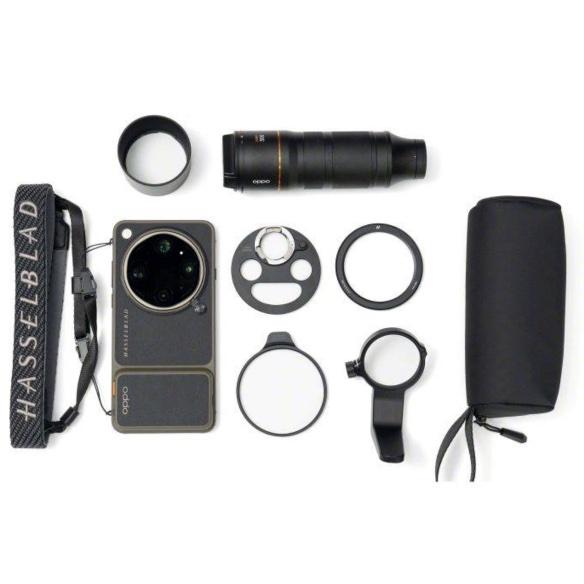
The phone arrives in a large square box that includes an orange case, a tool for removing the dual nanoSIM tray, and a 100 W SuperVOOC charger with a white cable (USB-A and USB-C ends). The seller also included an adapter from a Chinese charger to a European one.
Get ready for a very long read, because the OPPO Find X9 Ultra deserves to be broken down into the smallest imaginable detail so you know exactly what you’re paying for with this premium phone priced at close to the seventeen hundred euro mark.
Exclusive offer from us
Our partner Gshopper has an offer here for the global version of the absolute smartphone beast, the OPPO Find X9 Ultra. Both storage versions are currently available for shipping within 24 hours, and the 512 GB version is also available in a beautiful orange color. Delivery to your address will take about 10 to 15 days. A huge advantage is the optimized duty-free shipping (and no postage), so you won’t pay any extra fees, no customs duty or VAT even after July 1. Everything is already included in the coupon price.
You can read more in our coupon article.
OPPO Find X9 Ultra Global Version

TIPWith Standard Shipping via GShopper, you pay no extra fees—everything is already included in the price!
We recommend choosing Standard Shipping from the GShopper seller—so you won’t have to pay anything extra. Customs fees and any VAT are handled by the seller for you. Shipping can be selected in the cart, after you enter your delivery address. Delivery with this option usually takes about 15 business days from shipment from the warehouse, but it may also take longer.
TIPWith Standard Shipping via GShopper, you pay no extra fees—everything is already included in the price!
We recommend choosing Standard Shipping from the GShopper seller—so you won’t have to pay anything extra. Customs fees and any VAT are handled by the seller for you. Shipping can be selected in the cart, after you enter your delivery address. Delivery with this option usually takes about 15 business days from shipment from the warehouse, but it may also take longer.
TIPWith Standard Shipping via GShopper, you pay no extra fees—everything is already included in the price!
We recommend choosing Standard Shipping from the GShopper seller—so you won’t have to pay anything extra. Customs fees and any VAT are handled by the seller for you. Shipping can be selected in the cart, after you enter your delivery address. Delivery with this option usually takes about 15 business days from shipment from the warehouse, but it may also take longer.
Our extra service with VIP support — we’ll handle the order on Gshopper for you and ship it straight to your address.
If you’re not experienced with shopping on Gshopper, your payment won’t go through, or the coupon just isn’t working, we offer our readers and customers a service where we place the order directly to your address. You send us the money by bank transfer, and we’ll order the product straight to you. That way, you don’t have to worry about failed payments or coupon issues, and you can be sure the whole order will go 100 % smoothly. Plus, you automatically get our VIP support — we handle any shipment issues for you and help with claims too. The fee for this service is €15 on top of the product price. You can contact us by email at info(@)chinaplanet.sk or on Messenger, where we’re active all the time.
OPPO Find X9 Ultra specs
| OPPO Find X9 Ultra | |
|---|---|
| Model | OPPO Find X9 Ultra |
| Dimensions | 163.2 × 77.0 × 8.7 mm / 9.1 mm |
| Weight | 235 g |
| Construction | Gorilla Glass Victus 2 on the front / aluminum frame / glass or vegan leather on the back |
| Durability | IP68 / IP69 |
| Display | 6.82" LTPO AMOLED |
| Resolution 3168 × 1440 px / 510 PPI | |
| 144 Hz refresh rate | |
| Dolby Vision / HDR10+ / Ultra HDR | |
| Brightness 800 nits typical / 1800 nits HBM / 3600 nits peak | |
| 1 billion colors | |
| Gorilla Glass Victus 2 | |
| Processor | Qualcomm Snapdragon 8 Elite Gen 5 / 3 nm |
| Graphics | Adreno 840 |
| Operating system | Android 16 / ColorOS 16 / 5 major Android updates |
| RAM | 12 GB / 16 GB LPDDR5X |
| Storage | 256 GB / 512 GB / 1 TB UFS 4.1 |
| Memory card slot | No |
| Main camera | 200 MP wide-angle / f1.5 / OIS / 1/1.12" |
| 200 MP periscope / 3x optical zoom / OIS | |
| 50 MP periscope / 10x optical zoom / OIS | |
| 50 MP ultra-wide-angle / 123° | |
| Laser AF / spectral sensor / Hasselblad calibration | |
| 8K 30 fps / 4K up to 120 fps | |
| Dolby Vision HDR / 10-bit / O-Log2 / Cinematic LUT | |
| Front camera | 50 MP / PDAF |
| 4K 60 fps | |
| Battery | 7050 mAh Si/C |
| Charging | 100 W wired SuperVOOC |
| 50 W wireless | |
| 10 W reverse wireless | |
| 55 W PPS | |
| 18 W PD / QC | |
| SIM | Dual Nano SIM + eSIM / up to 2 active |
| WiFi | Wi-Fi 7 / 6E / tri-band |
| Bluetooth | Bluetooth 6.0 / aptX HD / aptX Adaptive / LHDC 5 |
| Navigation | GPS L1+L5 / Galileo / GLONASS / BeiDou / NavIC / QZSS |
| NFC | Yes |
| Infrared port | Yes |
| USB | USB-C 3.2 / OTG |
| Speakers | Stereo |
| 3.5 mm jack | No |
| Biometrics | Ultrasonic in-display fingerprint reader |
| Colors | Tundra Umber / Canyon Orange / Polar Glacier |
Design and build: A majestic giant in gorgeous orange
The design and build quality of this smartphone immediately make it clear, as soon as you take it out of the box, that this is not an ordinary phone for an ordinary user, but a massive tool intended for the most demanding tech enthusiasts and mobile photographers.
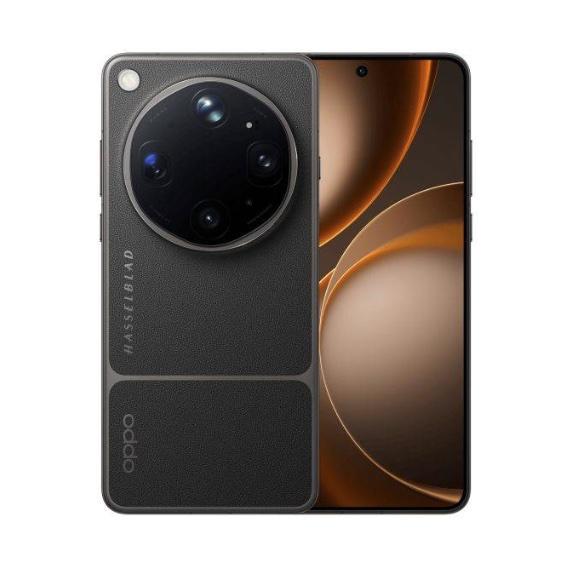
The device itself has an exceptionally majestic footprint and, with a weight of 235 grams, it is definitely among the heaviest pieces on the market, which, combined with a thickness just under 9 millimeters, or over 9 millimeters at the protruding camera module, gives it an incredible sense of solidity and durability. The back of the phone in the version we tested feels very pleasant to the touch, although a bit more slippery.

This is a beautiful orange variant that gives the device a sense of luxury, but also a bit of uniqueness, and it clearly stands out from the crowd of boring, monotonous smartphones. We also have to praise the build for the fact that the body doesn’t pick up fingerprints at all. Well, except for the glass camera module, which you’ll need to clean regularly.
This gigantic round camera module that protrudes from the body really noticeably lets the whole world know that photography is the primary purpose of this model. The dedicated control element on the right side also suggests the same—it's used to activate the camera, zoom in, focus, and capture shots.

Although the lens module with individual lenses is enormous, thanks to its symmetrical placement in the center of the upper half of the back wall, the phone doesn’t wobble from side to side on a table as aggressively as it’s common with smartphones that have lenses placed asymmetrically. The aluminum frame that firmly clamps all the components together feels cool to the touch, is perfectly aligned with the display and the back cover, and includes all the standard elements, including a very fast connector on the bottom and stereo speaker grilles.

When it comes to durability, OPPO left nothing to chance, and the Find X9 Ultra comes with two durability certifications at once: IP68 and IP69. That means the phone is not only fully dust-tight and can handle being submerged in water to a depth of 1.5 meters for 30 minutes, but it also withstands high-pressure jets of hot water.
This is a feature we often see on specialized rugged phones for extreme conditions, and its presence in the flagship model is just further proof that OPPO made absolutely no compromises here. Even with its huge dimensions, the ergonomics of the device are surprisingly good—its edges are gently rounded, so the phone doesn’t cut into your palm.

While one-handed operation is practically impossible with such a large display, weight balance is handled so well that the device doesn’t have a tendency to slip out of your hand toward the heavy camera module. The top is a bit heavier, but it’s not as noticeable as it might seem at first glance.
Display: Flat panel with extreme brightness
Let’s move to the front, where you’ll find one of the most beautiful displays we’ve ever seen in a smartphone. It’s a huge panel with a full 6.8-inch diagonal that uses the most modern LTPO AMOLED technology. This technology lets you dynamically change the screen refresh rate from 1 Hz up to an incredible 144 Hz, depending on what content you’re viewing right now.

That delivers not only perfect smoothness when scrolling through the system or playing games, but also extreme battery savings when viewing static images or reading text. The display resolution is a premium 1440 x 3168 px, creating an incredibly sharp image where it’s absolutely impossible to distinguish individual pixels with the naked eye.
OPPO really set the bar high even in terms of maximum brightness—when showing HDR content, the screen can reach up to 3600 nits at peak. Even though it’s a lab value achievable only on a small portion of the display for a short time, the normal maximum brightness across the whole panel when using it in direct, harsh sunlight is so high that you’ll have absolutely no problem reading text—even when the sun is shining straight at the screen.


Thanks to support for 1 billion shades and technologies like Dolby Vision and HDR10+, the colors are unbelievably rich, vivid, and at the same time accurate. In the system settings, you can fine-tune color rendering in great detail to match your personal preferences—from natural tones to extremely saturated colors.

The display is protected by tough glass—Corning Gorilla Glass, 2nd Gen Victus—which offers excellent resistance to scratches and drops. Around the edges, the glass is only minimally present and very elegantly curved, which visually reduces even the already microscopic bezels around the display without causing unwanted palm touches on the sides of the screen.


The display also integrates a ultrasonic fingerprint reader, which is lightning-fast, accurate, and works flawlessly even when your fingers are wet or dirty, which is a huge advantage over older optical sensors. The overall experience of watching movies, browsing photos, or playing games on this display is simply immersive.
Performance: Relentless power and cooling extremes
Under the hood of this tech monster runs the strongest thing the mobile semiconductor industry currently has to offer, namely the uncompromising octa-core Qualcomm Snapdragon 8 Elite Gen 5 processor, built on 3 nm technology. This chip is paired with a huge amount of RAM, with our test unit featuring 12 GB of super-fast LPDDR5X memory, and all of that is complemented by a massive 512 GB storage using the latest and fastest UFS 4.1 standard.


This hardware setup guarantees that the phone flies through the system with incredible ease and smoothness. Launching the most demanding apps, switching between dozens of open background apps, editing 4K and even 8K video directly on the phone, or playing the most graphically advanced games at the highest possible settings is absolutely no problem for this device.
During a normal day, you won’t run into a single stutter or hesitation, everything is instant. However, it was during extreme performance testing that we hit a very interesting and important moment that deserves a closer look. We decided to subject the processor to truly demanding and ruthless tests to find out where its limits are.


We launched the first very demanding synthetic “stress tests” aimed at maximum graphics and computational load, but due to our excitement we ran them in sequence immediately one after another without any break. The extreme performance of the Snapdragon 8 Elite Gen 5 paid the price in the form of a huge amount of generated heat.
During these consecutive tests, the entire phone overheated heavily, especially around the aluminum frame and near the camera module, which ultimately caused the smartphone’s protection system to step in and force-close the apps to prevent physical damage to the internal components.


At first glance, this phenomenon surprised us a bit, but we quickly understood that our extreme and artificial testing method was to blame. Once we gave the phone a break and approached the testing the next day with a cooler head and normal intervals between measurements, the situation changed radically.
Both the popular and extremely demanding 3DMark Wild Life Extreme Stress Test and the well-known Burnout Benchmark ran completely smoothly and went all the way to the end without a single unexpected crash or premature termination, even though the phone shot up to temperatures that were unbearable to hold in the hand. However, this was an artificial test that does not represent real-world use, but only evaluates the device’s hard hardware limits.


This observation clearly shows that while the OPPO Find X9 Ultra has access to brutal, almost overkill performance capable of breaking every existing record in benchmark charts, the design of its cooling has physical limits. In everyday use, and even during several hours of gaming with regular mobile titles, you will most likely never reach this overheating state.
If you wanted to torture the phone for hours with specific apps for maximum synthetic performance without a break, you have to expect it to get significantly hot. Even so, it remains one of the most powerful pocket devices of today, one that will keep you at the top in terms of raw power for many years to come, with room to spare.

Connectivity options are then exceptionally rich; we’ve got tri-band Wi‑Fi 7, Bluetooth 6.0, various globally used GNSS services, NFC, an infrared port, or USB‑C 3.2. With 5G connectivity, there were no issues at all, and we achieved above-average transfer speeds.
Battery & charging: a three-day marathon
The aspect that completely blew us away about the OPPO Find X9 Ultra, and where this smartphone truly excels—so much so that the competition can only quietly learn in the corner—is battery life and its overall management. OPPO managed to fit an incredible 7,050 mAh capacity into the internals of what looks like a relatively slim device, thanks to the innovative silicon-carbon (Si/C) technology.

It enables much higher energy density in a smaller space compared to conventional lithium-ion batteries. The results in practice are simply breathtaking and almost deny what we’re used to with flagship phones. In our testing, with full oversight and totally normal everyday use, we reached a full three days of operation on a single charge.
During these three days, we didn’t hold back on the phone—we were connected to networks, we took photos, we communicated, and the overall screen-on time, the so-called Screen On Time (SOT), stopped at an amazing 10 hours. If you’re among even more demanding users who barely ever put the phone down, you’ll still get through a full two days without any problems, and with this level of heavy usage you can easily hit more than 12 hours SOT. The battery life of this smartphone can be described in one word: brutal. Based on our experience, it’s almost absolutely impossible to drain this phone in a single day—you’d have to try to do it in a very artificial, deliberate way.

A great example of optimization is our multimedia test, where we continuously watched videos on the phone for a full two hours on YouTube using a Wi‑Fi connection with brightness set to a comfortable mid level, and this activity only shaved off a negligible 7% from the total battery capacity. We ran the exact same test in parallel with a Vivo X100 Ultra, which has a 5,500 mAh Si/C battery. For comparison, this phone’s battery level dropped by 11%.
This kind of efficiency means absolute freedom and eliminates any anxiety about a drained battery. And if that moment does happen and you have to plug the phone in, the business-side fast-charging technology SuperVOOC with a power of 100 W takes over, charging this huge battery with impressive momentum.

We measured the charging curve from a nearly fully depleted state (1%), i.e., from one percent, very carefully, and here are our exact results captured in ten-minute intervals:
- 10 minutes: 30%
- 20 minutes: 49%
- 30 minutes: 67%
- 40 minutes: 86%
- 50 minutes: 97%
- Full charge: 54 minutes
Sure, on the market you’ll find devices with smaller batteries that charge a bit faster, and we also need to point out that to achieve these maximum speeds you need the original charger from OPPO, because when using universal standards like Power Delivery, the charging power drops to roughly 40 W.
Anyway, considering the enormous battery capacity and the resulting need to charge the phone only once every 2 or 3 days, the 54 minutes spent plugged in is an absolutely negligible amount of time. Of course, there’s also very fast 50 W wireless charging, which is just as quick and highly convenient. The only thing that might be missing is the availability of magnets on the back of the smartphone in a MagSafe-style setup, but that can be solved by buying a compatible case from a third party.
Software: A surprising fusion of two worlds
One of the most talked-about, most controversial—yet for many surprisingly pleasant—changes in this smartphone is its approach to software. OPPO Find X9 Ultra runs on the latest operating system Android 16, overlaid with the user interface ColorOS version 16.
This time, the manufacturer decided on a truly bold design move, covering the entire interface in a new visual “coat” called Liquid Glass, which doesn’t hide—at all, and we mean at all—where the inspiration comes from: the Apple iOS 26 operating system. Here you can see a similar layout for the control center, a similar style of transparent layers, icons, and animations—plus the way notifications are handled strongly evokes the world of Apple devices.

For die-hard Android purists, this Apple-inspired user experience might feel like a step too far, maybe even as an unnecessary loss of the brand’s identity, OPPO—but we have to admit the system itself is incredibly smooth, beautifully animated, and works without the slightest hesitation.
However, the biggest surprise this software approach brings—and one we were literally thrilled by—is the phone’s ability to connect with the Apple product ecosystem, specifically with Mac computers. OPPO integrated a tool called O+ Connect into the system, which is basically a small miracle for anyone who combines an Android phone with an Apple computer.


From our own experience, after thorough testing, we can confirm that with Mac we can reliably and without interruptions work every single day using this feature. File transfer, notification synchronization, screen mirroring, and even the AirDrop feature are largely emulated and replaced via Quick Share technology. It works between these diametrically different platforms on OPPO so smoothly and naturally that it feels like you’re holding an iPhone in your hand. After long-term use of the Vivo X100 Ultra, we can say that this flawless, deep integration with a work Mac is one of the main arguments convincing us to switch from Vivo to OPPO.


It’s a fascinating phenomenon: a Chinese Android smartphone maker can build a software bridge into the closed Apple world better than most of the competition on the market. The manufacturer also promises long software support in the form of 5 major OS updates for Android and up to 6 years of security patches.

That puts OPPO at the absolute top and guarantees the phone stays safe and up to date for a very, very long time. We’d personally be totally fine going without preinstalled bloatware—different third-party apps that you can download yourself from the store—but luckily removing them takes just a few seconds.
Cameras: Versatility under Hasselblad’s guidance
We’re now getting to the most important part and the main selling point of this ultra-premium device—of course, that massive, hardware-intensive setup of four rear cameras, developed through close, deepening collaboration with the legendary photography company Hasselblad.

OPPO has created a system aimed at absolute versatility, and in terms of raw hardware specs it makes the current offerings from Samsung and Apple look rather ordinary and dated. The setup covers an enormous range of focal lengths, from an ultra-wide 14 millimeters all the way to an extreme zoomed-in 230 millimeters, and everywhere it uses top-tier, large sensors with excellent light intake.
The main camera is equipped with an astounding Sony sensor, a huge 200 MPx resolution, a stunning f/1.5 aperture, and a size of almost a full inch. Photos from this main sensor are, without exaggeration, a masterpiece.
On sunny days, the dynamic range is absolutely flawless, the huge sensor gives you incredibly natural depth of field and smooth optical bokeh even without portrait mode, and the level of detail is so high that when you zoom in on the photo it feels like you’re looking through a microscope. The colors, under the direction of Hasselblad, are tuned more toward a softer, more believable, and slightly muted palette, which we in the editorial team highly appreciate.


Instead of the artificial, oversaturated, and flashy look we’re used to from other manufacturers, the OPPO Find X9 Ultra offers a realistic image that feels atmospheric and leaves room for your own post-processing, although red and orange tones can sometimes be a bit more pronounced because of Hasselblad's specific color science. We noticed this when shooting sunrise and sunset, where that orange was incredibly saturated.
This massive sensor also shines at night, when thanks to the wide aperture it pulls in loads of light and produces night shots full of color and detail without excessive noise, although sometimes we felt that the HDR algorithms were a bit too aggressive with strong point light sources in the dark. That caused slight blending of contrast and occasional edge oversharpening.
Telephoto lenses: The kingdom of detail and zoom
The real magic and a huge dose of fun only begin when you start using the pair of telephoto lenses. The OPPO Find X9 Ultra comes with a 200 MPx sensor with 3x optical zoom, corresponding to a focal length of 70 millimeters, and this was the lens we fell in love with the most during testing.

With an aperture of f/2.2 and a massive sensor, it produces portraits and architecture details that make you wonder whether you’re really looking at a smartphone photo and not one from an expensive mirrorless camera. The level of facial detail, the structure of hair or eyes, and the way this lens naturally compresses the background and separates the subject from it is simply phenomenal, and in a direct comparison with the latest Pixels from Google, the results from OPPO look significantly more plastic, more exposed, and cleaner.
The second weapon in the zoom arsenal is a unique 50 MPx periscope lens with an incredible 10x optical zoom and a focal length of 230 millimeters. This lens lets you literally pull in objects that are almost invisible to the naked eye, while in good daylight it maintains surprisingly excellent quality with color rendering that stays consistent with the other sensors.


Of course, due to physics, this lens has a slightly narrower f/3.5 aperture and a smaller sensor, which starts to show as the light gets worse. In dim light and at night, exposure times get longer, and although optical stabilization works wonders, at such extreme zoom even a microscopic hand tremor can cause blur.
During the day, however, even from photos cropped to 20x zoom, you can get beautiful, fully usable shots, although beyond 30x zoom strong diffuse artificial intelligence kicks in and the image starts losing depth.
When taking shots with such extreme zoom, the photo app also offers the option to turn on AI detail generation, but from our experience the effect was either very minimal or even worse, due to unnatural artifacts and excessive sharpening, especially around the edges of photographed subjects.
Ultra-wide-angle sensor, selfie and video
The weakest link in an otherwise uncompromising setup is the 50 MP ultra-wide camera with a 14-millimeter focal length. Don’t get us wrong, it’s not a bad camera at all and most people would be more than happy with it, but in direct comparison with the brilliance of the main and 3x sensor, it simply comes up short.
Details aren’t quite as perfectly sharp at the edges, you may occasionally notice slight chromatic aberration in high-contrast areas, and HDR can sometimes be almost too eager. In addition, this sensor sometimes tends to push green and blue tones slightly outside the range captured by the other three lenses.

Personally, we barely used it anyway, since the primary sensor already has a very pleasantly wide 23-millimeter focal length by default, which fits a lot into the frame. The selfie camera on the front offers a very decent 50 MPx with excellent dynamic range and detail, but its field of view is extremely wide in the default setting, which causes slight face distortion, so we had to keep using the software crop to stop faces from looking unnaturally stretched. Skin tone rendering on the front camera also occasionally lagged behind the perfection of the rear one. As for video, the massive number of megapixels really shows here.

OPPO Find X9 Ultra can record video in the enormous 8K at 30 fps resolution from the main lens all the way up to 10x zoom, and if you prefer high smoothness, all lenses handle gorgeous 4K at an incredible 120 fps. Stabilization is top-notch, and while the software bokeh effect in video looks stunning and very cinematic, tiny imperfections in edge detection are still visible during really fast subject movement.
One weakness of the video is also the smoothness of switching between individual lenses while shooting; since the phone has four different sensors with very different focal lengths, when continuously zooming smoothly you can’t avoid a slight image jolt when jumping from one optic to another, although this can be worked around by editing or shooting at fixed focal lengths.
Photo samples:


Video samples:
Battle of the titans: OPPO Find X9 Ultra vs. Vivo X100 Ultra
Of course, we have to return once more to the announced comparison with our current editorial benchmark, the somewhat older Vivo X100 Ultra, especially in photography. Both phones belong among the very best in the world, and the differences between them are more a matter of personal preference and nuances, but they are noticeable. Vivo comes with three modes with different colors by default – Zeiss (Natural), Vibrant and Textured. OPPO has one default (Hasselblad) mode.


In general, we have to admit that the cameras on OPPO are, without exaggeration, absolutely mega and deliver extremely strong performance, but in a direct comparison with Vivo, the shots from the Find X9 Ultra have a slightly more noticeable impact, along with image processing using artificial intelligence. Photos from OPPO sometimes look a bit more polished, more finely tuned in terms of software, and sometimes, maybe by a fraction of a second, less organically than with the raw processing on Vivo.


While OPPO excels in its versatility and color science focused on mood, Vivo still holds on to one fairly unshakeable weapon in the world of mobile photography—its absolutely unbeatable telephoto lens aimed at macro photography. It can pull micro-structures and object details from incredibly close distances with an optical quality that OPPO still can’t fully match in macro mode with its 3x and 10x periscope. Pay special attention to the bokeh effect on Vive – phenomenal.


So if you’re an obsessive macro-shooting enthusiast for insect shots, raindrops, or tiny textures, the Vivo X100 Ultra still keeps its slight crown. In absolutely all other respects—whether it’s focusing speed, the quality of night photos, the smoothness of the operating system, thermal management outside synthetic extremes, a huge battery, or perfect cooperation and integration with computers from Apple—OPPO takes the symbolic scepter of king with a massive lead.


Conclusion: A technological gem for the most demanding
In conclusion, we have to say that the OPPO Find X9 Ultra isn’t a phone for everyone—not only because of its huge size and its specific design direction toward professional photo equipment, but primarily because of its retail price. The price tag set at nearly 1700 euros in Europe makes this device an extremely exclusive piece of luxury electronics meant for the absolute most demanding enthusiasts, photographers, and tech connoisseurs who refuse the established compromises of mainstream models and who clearly know that they want the best and most advanced on the market, no matter the cost.

Sure, the average user looking for a good phone with long support and a secure ecosystem at a reasonable price will probably go for a Galaxy from Samsung or Pixels from Google, which are a safe bet. But these users will never experience that genuine tech excitement, the tangible feeling of uniqueness, and the creative freedom when composing shots with a 230-millimeter periscope, or the sense of freedom knowing their battery will last for 3 days straight without needing a charger.
OPPO Find X9 Ultra redefines the ultra-premium phone category, expertly combining breathtaking hardware, unbelievable endurance, a smooth system with unexpected options for connecting with Mac, and cameras that push the boundaries of mobile optics into areas reserved until recently only for professionals.

If you’re part of that narrow target group and you have access to such a high budget, OPPO Find X9 Ultra will be one of the best, most fun, and most technologically advanced smartphones ever to have graced your palm—and you definitely won’t regret investing in it. We’re still genuinely amazed by it and we’re looking forward to every next chance to take this technical marvel out into the world and shoot photos with it, because in the end, this massive gem is truly all about that.
Follow the China Planet website, subscribe to our monthly newsletter, and be sure to check out our Facebook page, the China Planet group, and join our Telegram, where we add the best offers and coupons from China every single day.
Don’t miss the best coupons 📩
Subscribe and we’ll email you new coupons before they expire. We only send it once a month — no spam.


Discussion (0)